
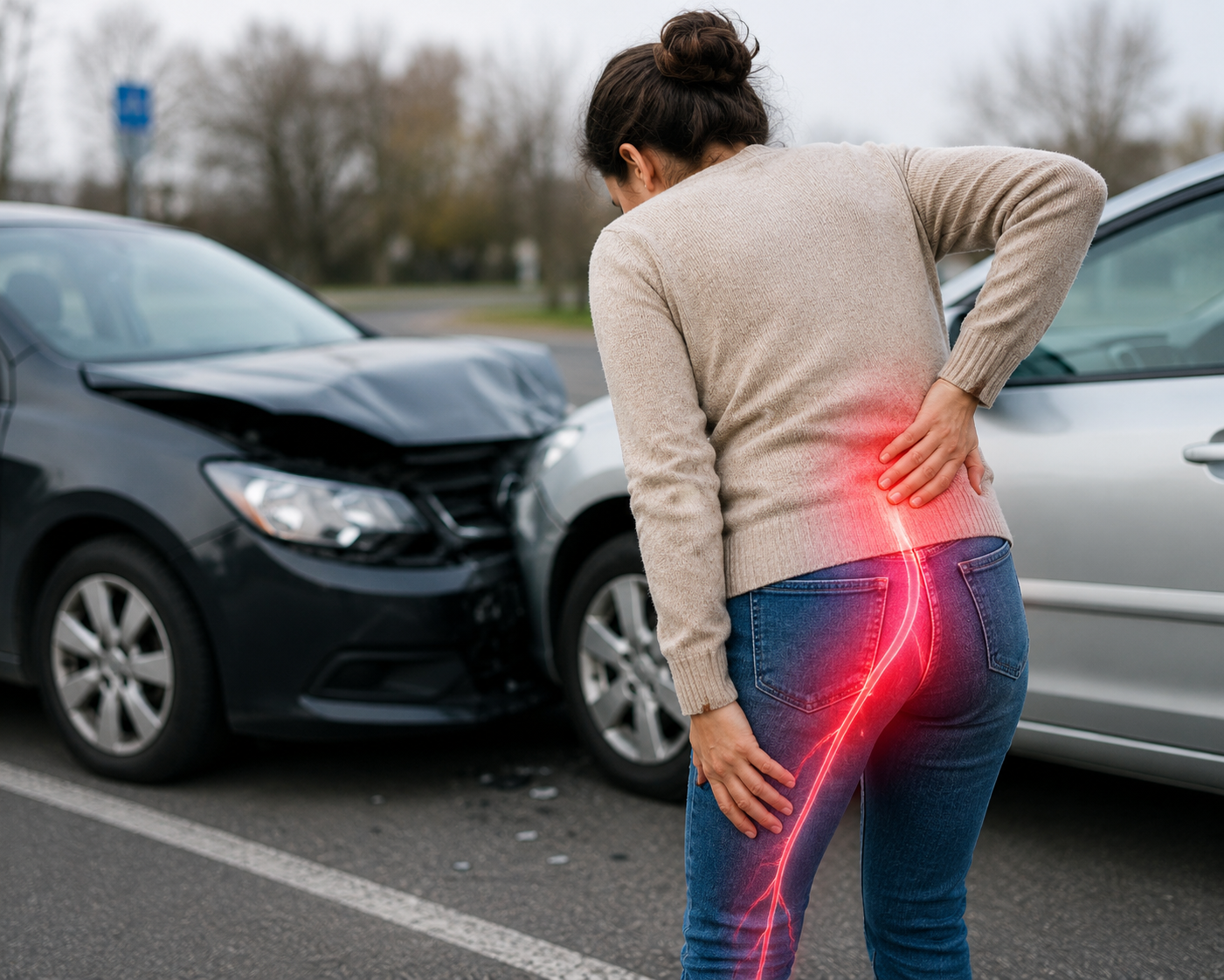
Sciatica Pain After a Car Accident in Cedar Park, TX
Get Relief from Sciatic Nerve Pain — $0 Out-of-Pocket Auto Injury Care
At Car Accident Chiropractic in Cedar Park, TX, we specialize in treating sciatica pain caused by car accidents, helping reduce nerve irritation, relieve leg pain, restore mobility, and prevent long-term complications.
Signs You May Be Experiencing Sciatica After a Car Accident in Cedar Park, TX
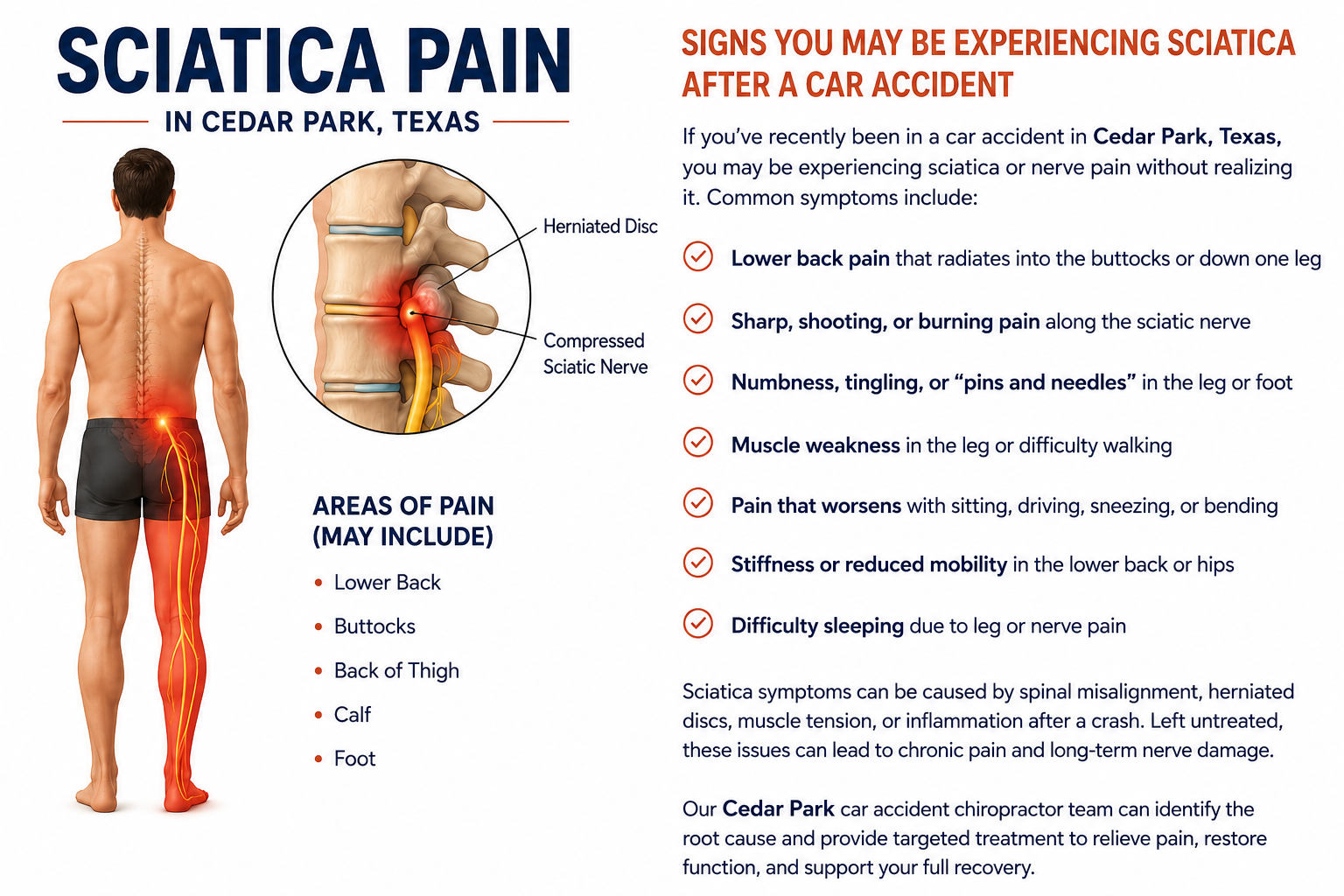
If you've recently been involved in a car accident in Cedar Park, Texas, you may be experiencing sciatica caused by irritation or compression of the sciatic nerve. Symptoms don't always appear immediately and may worsen as inflammation develops. Common signs include:
Lower back pain that radiates into the buttocks or down one leg
Sharp, shooting, or burning nerve pain
Numbness or tingling in the leg, foot, or toes
Muscle weakness or difficulty standing or walking
Pain that worsens when sitting, driving, coughing, or bending
Hip or buttock pain after the accident
Reduced mobility or stiffness in the lower back and hips
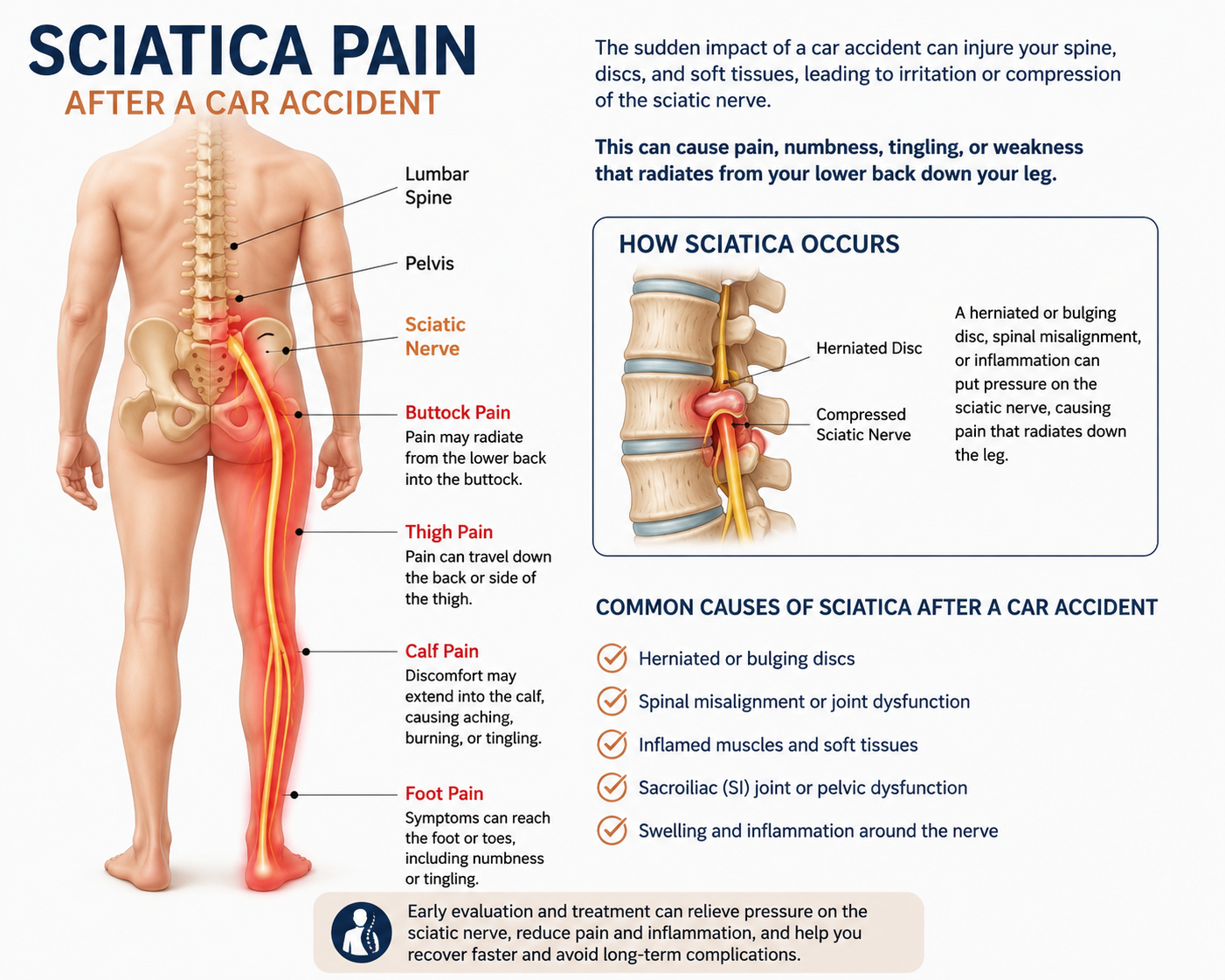
Sciatica after a car accident is often caused by herniated discs, spinal
misalignment, inflammation, or soft tissue injuries sustained during the crash. Without proper treatment, nerve irritation can become chronic and lead to long-term pain, weakness, or permanent nerve damage.
Our Cedar Park car accident chiropractor performs a comprehensive evaluation to identify the true cause of your sciatic pain and creates a personalized treatment plan to reduce nerve pressure, relieve pain, restore mobility, and help you recover safely after your accident.
Why Sciatica Happens After a Car Accident in Georgetown, TX
Even in a low-speed car accident in Cedar Park, Texas, the force of a collision can place tremendous stress on your lower back, pelvis, and spine. This trauma can irritate or compress the sciatic nerve, leading to pain that radiates from your lower back into your hip, buttock, and leg. Common accident-related causes of sciatica include:
Herniated or bulging discs pressing on the sciatic nerve
Spinal misalignments that increase nerve irritation
Inflamed muscles and soft tissues surrounding the nerve
Pelvic or sacroiliac (SI) joint dysfunction after impact
Swelling and inflammation that develops in the days following the crash
Without proper treatment, sciatic nerve irritation can become chronic, causing ongoing pain, numbness, muscle weakness, and limited mobility. Early evaluation and treatment help reduce inflammation, relieve pressure on the nerve, and promote a faster, more complete recovery.
How We Treat Whiplash After a Car Accident in Cedar Park, TX
Every sciatica treatment plan in Cedar Park, TX begins with identifying the exact cause of your nerve pain. After a car accident, sciatica can develop from herniated discs, spinal misalignments, inflamed soft tissues, or pelvic injuries. Because no two accidents are alike, we create a personalized treatment plan focused on relieving pressure on the sciatic nerve, reducing inflammation, and restoring normal movement.
Your Cedar Park sciatica treatment plan may include:
-
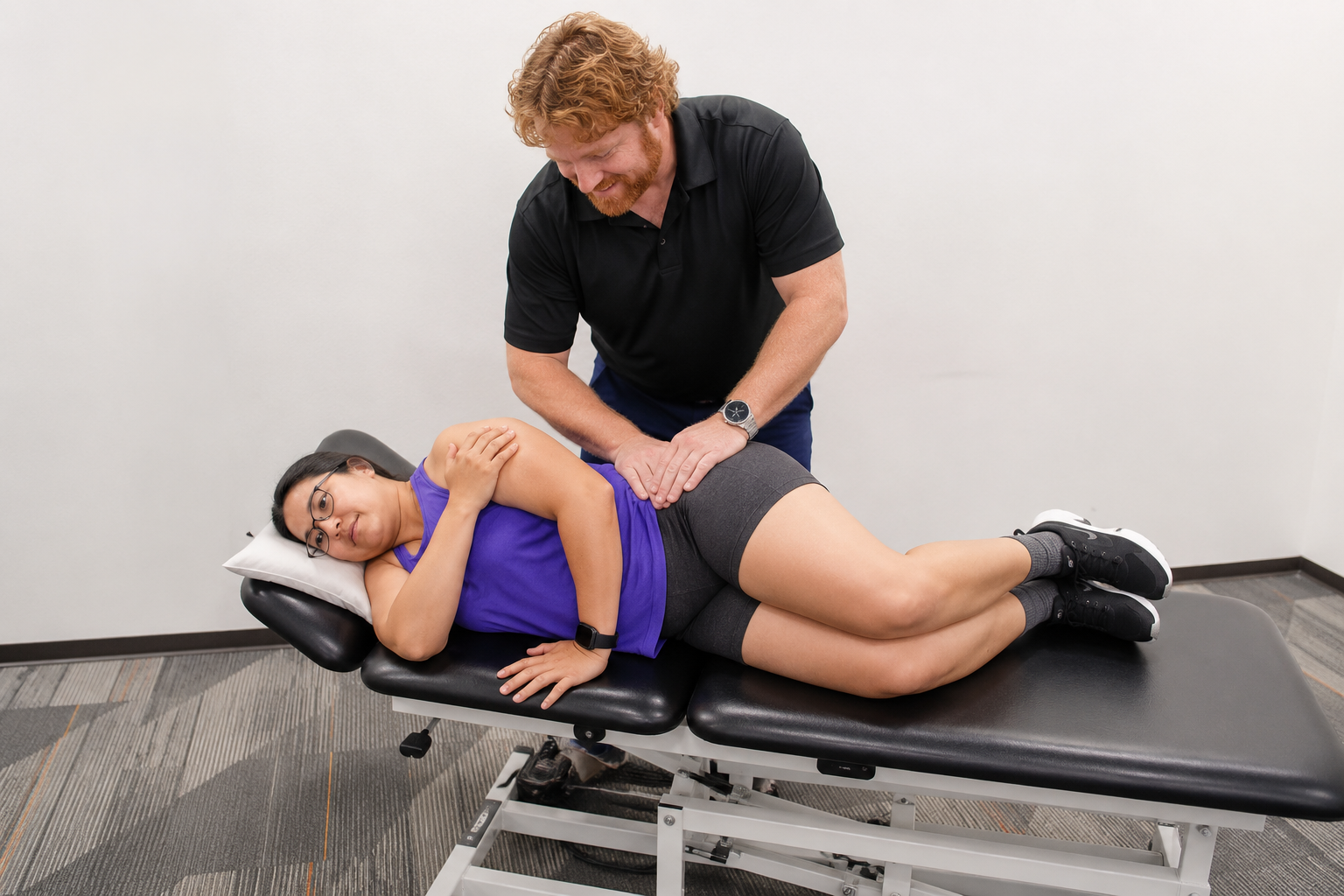
Our Cedar Park car accident chiropractor performs gentle, targeted chiropractic adjustments to restore proper alignment of the lumbar spine and pelvis. Correcting spinal dysfunction helps reduce pressure on the sciatic nerve while improving mobility and decreasing pain.
Using safe, precise chiropractic techniques, we help:
Relieve pressure on the sciatic nerve
Improve spinal and pelvic alignment
Restore healthy lower back mobility
Reduce inflammation and muscle guarding
Support long-term recovery after your Georgetown car accident
-
Tight muscles surrounding the lower back, hips, and glutes often contribute to sciatic nerve irritation after a collision. Our soft tissue therapy helps release muscle tension, improve circulation, decrease inflammation, and reduce painful muscle spasms.
-
If a herniated or bulging disc is compressing the sciatic nerve, spinal decompression may help relieve pressure by gently creating space between the vertebrae. This non-surgical therapy encourages disc healing while reducing leg pain, numbness, and tingling.
-
Neuromuscular Re-Education
Car accidents frequently alter how your muscles stabilize your spine and pelvis. Neuromuscular rehabilitation retrains proper movement patterns, improves balance, restores coordination, and helps prevent recurring sciatic pain.
-
As your pain improves, we prescribe customized exercises designed to strengthen your core, hips, and lower back while improving flexibility and supporting long-term spinal stability.
These exercises help:
Strengthen the muscles supporting your spine
Improve flexibility and posture
Reduce pressure on the sciatic nerve
Prevent future flare-ups
Restore normal daily movement
-
While many cases of accident-related sciatica improve with conservative care, some patients require additional imaging. If we suspect a significant disc injury or another condition requiring further evaluation, we'll coordinate the appropriate imaging or specialist referral to ensure you receive the right treatment.
Does Sciatica Heal on Its Own?
Sometimes mild sciatic nerve irritation improves with rest, but many cases caused by a car accident do not fully resolve without treatment. When inflammation, spinal misalignment, or a disc injury continues to compress the nerve, symptoms often become chronic and progressively more difficult to treat.
Research consistently shows that early evaluation and treatment improve recovery, reduce inflammation, and decrease the risk of long-term nerve damage and chronic pain.
If you're experiencing lower back pain, buttock pain, numbness, tingling, or pain shooting down your leg after a car accident in Cedar Park, TX, don't wait for symptoms to worsen. Early treatment gives you the best opportunity for a complete recovery.
$0 Out-of-Pocket Sciatica Treatment After a Car Accident in Cedar Park, TX
If you're suffering from sciatica after a car accident in Cedar Park, TX, you may qualify for treatment with $0 out-of-pocket costs. When another driver is at fault, your examination, chiropractic care, rehabilitation, diagnostic imaging, and injury documentation are often covered through auto insurance, MedPay, or an attorney lien—allowing you to begin treatment without paying upfront. No referral is required.
At Car Accident Chiropractic, we've helped countless Cedar Park car accident patients recover from sciatic nerve pain, lower back injuries, herniated discs, and radiating leg pain after motor vehicle accidents. Our team handles the paperwork and insurance coordination so you can focus on healing.
Our team provides:
Comprehensive injury documentation for insurance companies and attorneys
Direct communication with your attorney (or we can help connect you with one)
Auto insurance billing and claims management handled by our office
Detailed medical reports documenting your diagnosis, treatment plan, and recovery progress
Personalized care coordination from your first visit through your final release
If you're searching for a Cedar Park car accident chiropractor or need sciatica treatment after a car accident in Cedar Park, Texas, our experienced team is here to relieve your pain, restore your mobility, and make the insurance process as simple as possible.
Is My Sciatica After a Car Accident More Serious Than I Think?
Many people assume their sciatica is simply "lower back pain," but sciatica after a car accident is often caused by injuries much deeper within the spine. The force of a collision can damage discs, joints, ligaments, muscles, and nerves—placing pressure on the sciatic nerve. Symptoms may seem mild immediately after the crash but often become significantly worse over the next 24–72 hours as inflammation develops.
A car accident-related sciatic injury may include:
◆ Herniated or Bulging Discs
A car accident can cause spinal discs to bulge or herniate, placing direct pressure on the sciatic nerve. This often leads to pain that radiates from the lower back into the buttock, thigh, calf, or foot, along with numbness or tingling. Early treatment can help reduce pressure on the nerve and prevent long-term complications.
◆ Lumbar Spinal Misalignment
The impact of a collision can shift the vertebrae in your lower back or pelvis out of proper alignment. These joint restrictions may increase pressure on the sciatic nerve, causing persistent lower back pain, reduced mobility, and pain that worsens while sitting, standing, or walking.
◆ Inflamed Muscles & Soft Tissue Injuries
The muscles surrounding your lower back, hips, and pelvis frequently become strained during a crash. As these tissues swell, they can compress or irritate the sciatic nerve, causing burning pain, muscle spasms, and stiffness that limits your daily activities.
◆ Sacroiliac (SI) Joint Dysfunction
The SI joints connect your pelvis to your spine and commonly absorb force during a motor vehicle accident. When these joints become injured or unstable, they can mimic or contribute to sciatic nerve pain, producing discomfort deep in the buttocks and pain that radiates down the leg.
◆ Sciatic Nerve Inflammation
Inflammation around the sciatic nerve may cause shooting pain, numbness, tingling, muscle weakness, or "pins and needles" sensations throughout the leg and foot. Left untreated, prolonged nerve irritation can lead to chronic pain and ongoing mobility problems.
When to Get Checked
If your symptoms:
Have lasted longer than 24 hours
Are getting worse instead of better
Include pain shooting down your leg, numbness, tingling, muscle weakness, or burning sensations
Make it difficult to sit, stand, walk, or drive comfortably
Started days after your accident, even if you initially felt fine
...it's important to be evaluated by an experienced Cedar Park car accident chiropractor. Sciatic nerve pain often becomes more severe as inflammation increases, and early treatment can reduce the risk of chronic pain, nerve damage, and long-term mobility problems.
If you've been searching for "sciatica treatment near me," "lower back pain after a car accident," or "car accident chiropractor in Cedar Park, TX," don't wait for your symptoms to worsen. Our team specializes in diagnosing and treating accident-related sciatic nerve injuries so you can recover as quickly and safely as possible.
Additional Injuries We Treat After a Motor Vehicle Accident












Early Care Matters - Get Checked Before Symptoms Escalate
🔸Same Day Appointments 🔸Walk-In Appointments🔸$0 Out-of-Pocket 🔸Whiplash Injury Specialists
Frequently Asked Questions About Sciatica Pain in Cedar Park, TX
-
Yes. A car accident can cause sciatica by injuring the lower back, pelvis, spinal discs, or soft tissues surrounding the sciatic nerve. Even low-speed collisions can create enough force to irritate or compress the nerve, leading to pain that radiates down the leg. Our Cedar Park car accident chiropractor specializes in diagnosing and treating accident-related sciatica.
-
Sciatica often begins as lower back or buttock pain before radiating into the thigh, calf, or foot. Many patients describe sharp, shooting, burning, tingling, or numb sensations that worsen while sitting, driving, or walking.
-
Yes. Sciatica symptoms frequently appear 24 to 72 hours after a collision as inflammation develops around the injured tissues. It's common to feel relatively normal immediately after an accident before nerve irritation becomes noticeable.
-
We perform a comprehensive examination that includes orthopedic testing, neurological evaluation, range-of-motion measurements, and a detailed accident history. If necessary, we coordinate advanced imaging such as an MRI to identify herniated discs or other spinal injuries.
-
Common causes include herniated discs, spinal misalignments, pelvic injuries, sacroiliac joint dysfunction, muscle inflammation, and swelling that places pressure on the sciatic nerve.
-
Yes. Chiropractic care can reduce pressure on the sciatic nerve by restoring proper spinal alignment, improving joint mobility, decreasing inflammation, and helping injured tissues heal naturally without surgery whenever appropriate.
-
Recovery depends on the severity of the injury. Mild cases may improve within a few weeks, while more significant disc injuries or nerve irritation may require several months of treatment. Early care generally leads to a faster recovery.
-
Some mild cases improve on their own, but accident-related sciatica often involves structural injuries that continue irritating the nerve. Delaying treatment can increase the risk of chronic pain, muscle weakness, and long-term nerve damage.
-
Absolutely. A herniated or bulging lumbar disc is one of the most common causes of sciatica after a motor vehicle accident because it can compress the sciatic nerve and produce pain that radiates into the leg.
-
Treatment may include chiropractic adjustments, soft tissue therapy, spinal decompression, rehabilitation exercises, neuromuscular re-education, stretching, and home care recommendations. Every treatment plan is customized based on your injuries.
-
Not every patient needs an MRI. If your examination suggests a disc injury, nerve compression, or persistent neurological symptoms, your doctor may recommend advanced imaging to confirm the diagnosis.
-
Yes. If another driver caused the accident, your chiropractic care may qualify for $0 out-of-pocket costs through auto insurance, MedPay, or an attorney lien. Our office helps coordinate the paperwork so you can begin treatment quickly.
-
You should be evaluated as soon as possible after your accident, especially if you develop lower back pain, buttock pain, numbness, tingling, or pain that travels down your leg. Early treatment can help reduce inflammation and improve recovery.
-
Yes. Sitting for long periods often increases pressure on the lumbar spine and sciatic nerve, making symptoms worse. Many patients notice increased pain while driving or working at a desk following an accident.
-
Our clinic focuses exclusively on car accident injuries. We provide comprehensive examinations, personalized treatment plans, rehabilitation, detailed documentation for insurance and attorneys, and experience treating accident-related sciatica, herniated discs, and lower back injuries—all with the goal of helping you recover safely and completely.